FREE EXCEL DOWNLOAD
Free 13-Week Cash Flow Forecast Template

Download Your Free Excel Cash Flow Forecast Template
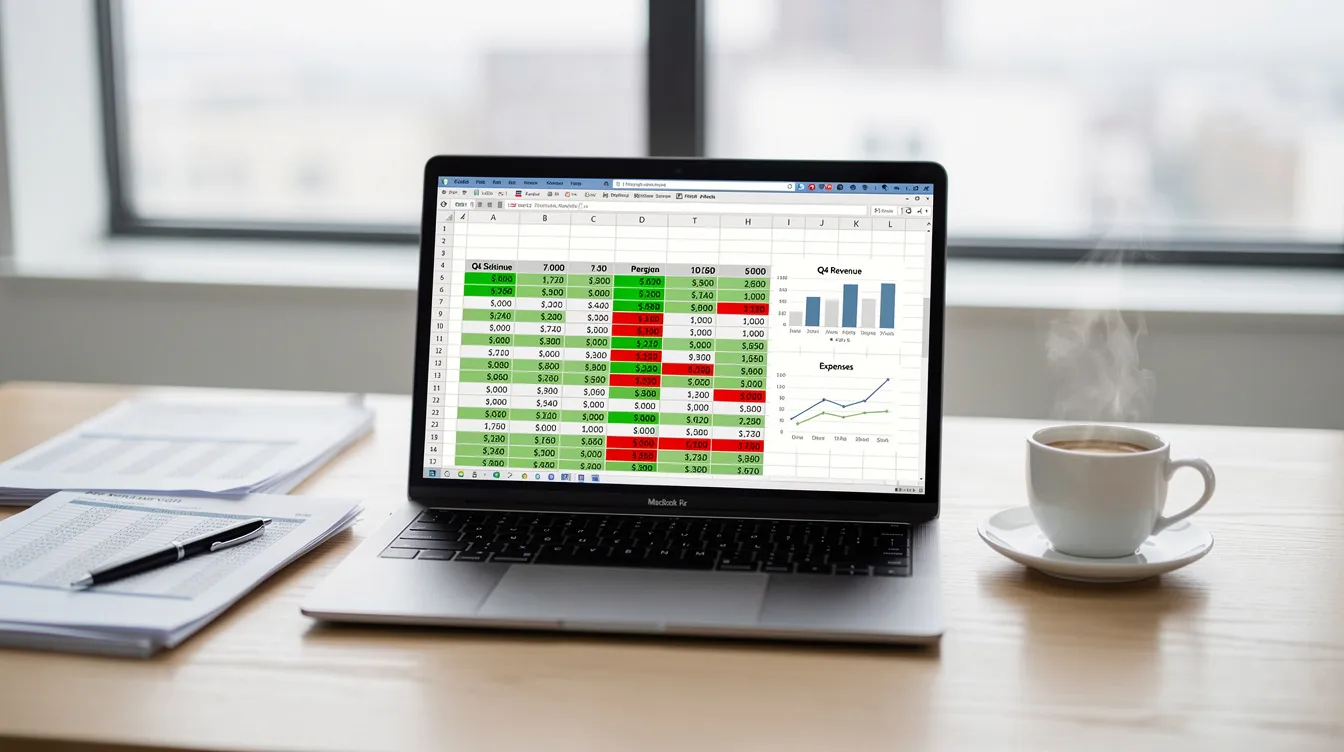
A cash flow forecast estimates future cash inflows and outflows so you can forecast cash flow with more accuracy. This template also works as a cash flow forecast example for structuring weekly projections. This template organizes those projections into 13 weekly columns so you can identify potential cash shortfalls before they become emergencies.
Here is what the template includes:
- Start Here Tab with setup instructions, your opening cash balance, forecasting period start date, and minimum cash target
- Weekly projected cash inflows broken out by customer payments, loans, grants, and other incoming cash sources
- Weekly projected cash outflows for payroll, supplier payments, rent, loan repayments, capital expenditures, and other operating expenses
- Opening and ending cash balance calculated automatically for each week, where each week's closing balance feeds the next week's opening balance
- Minimum cash target you set, with automatic calculation of cash above or below that target every week
- Action-needed alerts that flag weeks where your ending balance drops below your minimum cash target
- Summary section showing your lowest projected cash balance, the number of weeks below your target, and which week is the tightest
The template uses a rolling forecast structure. Each week, you drop the oldest week, add a new week at the end, and maintain a consistent 13-week horizon. Rolling forecasts maintain a consistent time horizon as periods end, keeping your view of the business's cash flow current.
Need help building and updating a forecast for your business? Explore our business advisory and fractional CFO support.
How to Use Your 13-Week Cash Flow Forecast Template
Step 1: Enter Your Expected Cash Inflows
Start with projected cash inflows from customer payments. Use your accounts receivable aging report to estimate when outstanding invoices will convert to actual cash inflows. A customer with net-30 terms who was invoiced on June 1 should appear in the week closest to July 1.
Add other incoming cash: draw-downs on lines of credit, expected loan proceeds, tax refunds, or asset sales. Place each item in the specific week you expect the money to land.
For construction businesses in the Tri-Cities area dealing with progress billing and retention releases, map those receipts to their expected payment dates, not invoice dates. The same applies to change order receipts, which often arrive weeks after approval.
Step 2: Input Your Cash Outflows
Enter all your expenses by the week they will actually be paid:
- Payroll and payroll taxes: placed in the exact weeks they process
- Vendor and supplier payments: based on your payment terms, not the invoice date
- Fixed costs: rent, insurance, utilities, and debt service in their scheduled weeks
- Variable costs: materials, subcontractor payments, fuel, and other costs that shift with project volume
- One-time expenses: quarterly tax payments, annual insurance renewals, or equipment purchases placed in the actual week they hit your bank account
Do not smooth lump-sum payments into monthly averages. A $12,000 quarterly tax payment landing in week 6 creates a very different cash picture than $1,000 spread evenly across 12 weeks.
Step 3: Monitor and Update Weekly
Update short-term forecasts daily or weekly for accuracy. Each week, replace your estimates with actual cash flows. Compare forecasted inflows with actual revenues to see where your assumptions were right and where they missed.
Analyze discrepancies to improve future cash flow forecasts. If you estimated a $15,000 customer payment in week 3 but it arrived in week 5, note the pattern. That customer may consistently pay two weeks past terms. Collecting historical financial data reveals spending patterns that inform projections over time.
Roll the forecast forward: remove the completed week, add a new week 13 at the end, and adjust any assumptions that have changed. Regularly reviewing forecasts against actual results helps improve accuracy.
Watch the action-needed alerts. When a week flags red, you have time to act: accelerate collections on overdue accounts receivable, delay a non-urgent vendor payment, draw on a credit line, or reschedule a capital purchase.
Cash Flow Is Not the Same as Profit
Profit measures whether sales revenue exceeds all your expenses over a period. Cash flow tracks whether there is enough cash in the bank on a specific day to pay what is due that day.
A profitable construction company might invoice $200,000 in June, incur $160,000 in costs, and show $40,000 in expected profitability. But if the $200,000 is tied up in retention and progress billing that won't be released until August, while payroll, materials, and subcontractor payments are due every two weeks, the company faces negative cash flow through all of July. The P&L shows a healthy quarter. The bank account tells a different story.
This gap between accrual accounting and actual cash timing is where the 13-week forecast fits. Direct forecasting uses actual cash data for short-term predictions, while indirect forecasting relies on financial statements for longer-term planning. The cash flow forecast template bridges that gap by tracking money coming in and outgoing cash on a weekly or monthly basis, giving you a real-time picture of your current cash position rather than a backward-looking summary of net income.
A cash flow forecast highlights cash shortages weeks or months in advance. It shows you when and where shortfalls will occur, so you can act before the bank balance hits zero.
When You Need More Than a Template
The template handles the forecasting process for straightforward cash flow management. But some decisions require modeling scenarios, stress-testing assumptions, and connecting cash flow projections to broader financial planning.
Hiring decisions. Adding a $65,000/year employee means $2,500 in biweekly payroll plus benefits, taxes, and onboarding costs. A cash forecasting model can show how many weeks until that hire's revenue contribution covers the cash drain, and whether working capital supports the ramp-up period.
Equipment purchases. A $120,000 piece of equipment paid in cash creates a one-week capital expenditure that reshapes the entire 13-week picture. Financing it at current interest rates spreads the cash outflows across months but adds loan payments to every future forecast. Scenario planning helps prepare for potential cash flow variability under either approach.
Pricing and margin analysis. Lowering prices to win a contract increases volume but compresses margins. How does that change net cash flow in weeks 6 through 13, when the new project's costs are running but customers paying under net-45 terms haven't remitted yet? Forecasts guide businesses in planning for growth and help identify whether a pricing shift creates cash shortages or excess cash.
Collections and payment terms. If your average days to collect is 52 but your vendor terms are net-30, you are funding a 22-day gap with your own cash. Tightening collection terms by 10 days changes your future cash inflows in specific, modelable weeks. Long-term forecasts support planning for future growth and large investments, including changes to payment terms.
Growth planning. Opening a second location, expanding into a new service area, or taking on a large contract all require answering: how much cash is needed, when does it need to be available, and when does the investment start generating incoming cash? Businesses often use cash flow forecasts when seeking financing. A cash flow forecast demonstrates financial stability.
When you reach these decisions, business advisory and fractional CFO support turn raw numbers into a plan. Having someone pressure-test assumptions, build what-if scenarios, and connect cash forecasting to your actual sales forecast and business performance changes the forecast from a tracking tool into a decision-making tool.
Frequently Asked Questions
What is a 13-week cash flow forecast?
A 13-week cash flow forecast is a week-by-week projection of all cash inflows and outflows for the next 13 weeks, which equals one fiscal quarter. It uses direct forecasting: tracking when actual cash moves in and out of your bank accounts, rather than when revenue is earned or expenses are incurred.
Forecasting involves defining the period and purpose based on organizational needs. The 13-week window is long enough to catch mid-quarter troughs, seasonal swings, and large scheduled obligations like quarterly taxes. It is short enough that assumptions stay credible. Key components of a forecast include opening balance, cash inflows, cash outflows, and closing balance.
How often should I update my cash flow forecast?
Weekly. Short-term forecasts should be updated daily or weekly. Each update replaces estimates with actual results, rolls the horizon forward one week, and recalibrates assumptions for weeks further out. Medium-term forecasts should be reviewed monthly for adjustments when you're working with longer planning horizons.
Regularly update forecasts to reflect actual performance. The comparison between forecast and actual cash flows is where learning happens. If you consistently overestimate how fast customers paying on net-30 terms actually remit, adjust your collection assumptions.
What should be included in a cash flow forecast?
To build a cash flow forecast, businesses should estimate both inflows and outflows:
Cash inflows:
- Customer payments, estimated by actual collection timing from accounts receivable aging
- Sales revenue from cash sales
- Loan proceeds, credit line draws
- Tax refunds, grants, other income
Cash outflows:
- Payroll, payroll taxes, and benefits
- Supplier payments and materials
- Rent, utilities, and other fixed costs
- Loan payments and debt service
- Insurance, licenses, and annual fees
- Capital expenditures
- Variable costs tied to project or production volume
Also include your opening cash balance, minimum cash target, and historical data from prior periods to validate assumptions.
Is a cash flow forecast the same as a profit and loss statement?
No. The cash flow statement and the profit and loss statement measure different things. The P&L uses accrual accounting: it records revenue when earned and expenses when incurred, regardless of when cash moves. The result is net income, which measures expected profitability over a period.
A cash flow forecast tracks actual cash: when it arrives and when it leaves. A business can report strong net income on its financial statements while simultaneously running out of cash because receivables are 60 days out and payroll is due Friday. The forecast catches that gap. Use both: the P&L for business performance over time, the cash flow forecast for whether you can meet this week's obligations.
When should I get help with cash flow forecasting?
Consider professional support when:
- Your business has seasonal revenue swings, large project-based payments, or retention-based billing that makes sample cash flow projections unreliable without deep modeling
- You need to present cash flow projections to a lender, investor, or grant program
- The variance between your forecasts and actual results stays wide after several update cycles
- You are planning a major decision (hiring, equipment purchase, new location) and need scenario analysis
- Your bookkeeping services system does not produce clean accounts receivable and accounts payable aging reports, making it hard to build accurate projections
Some businesses need cash management support, not just a template, when forecasting affects financing, payments, and risk decisions.
It facilitates risk mitigation by allowing businesses to arrange financing early. If you do not have clean data, even the best template produces guesswork. An accounting and advisory firm sets up the systems, validates assumptions, and builds forecasting models that connect to your actual business finances. In more complex cases, mixed period forecasts can combine daily, weekly, and monthly views when one planning horizon is not enough.
Need Help Turning the Numbers Into Decisions?
The template gives you a structure. It shows your future cash position, flags weeks where cash shortages may occur, and keeps you focused on actual cash flows rather than accrual-based assumptions.
When decisions get complex, Insight Business & Accounting Solutions provides business advisory and fractional CFO services to build scenario models, stress-test your assumptions, and connect your cash forecasting to growth planning, pricing analysis, and financial health benchmarks. We serve the Tri-Cities area (Richland, Kennewick, and Pasco), Washington State, and clients nationwide.
If you are ready to move from tracking cash to making informed financial decisions with it, schedule a call.