

Virtual Bookkeeping: Is It Right for Your Business?
Virtual bookkeeping means your bookkeeping is handled by an accounting team that doesn't need to work inside your office. Using cloud-based software like QuickBooks Online, bank accounts, credit cards, payroll, and other business systems can securely share financial information with your bookkeeper. The bookkeeping itself doesn't change. The difference is that information moves electronically instead of through paper files or someone sitting at a desk in your office.
That also doesn't mean you're expected to spend your day scanning receipts and uploading documents. Many financial transactions flow into the accounting system automatically, and information can often be shared through secure online tools. You may still need to answer questions or provide supporting documents from time to time, but the goal is to reduce administrative work—not create more of it.
Insight Business & Accounting Solutions combines technology with direct communication, following a philosophy that emphasizes clear financial insight, practical systems, and long-term relationships. We use connected systems to reduce manual data entry, reconcile accounts, review financial information, and keep your books current, while remaining available by phone, email, video meeting, or in person at our Richland office. Technology helps information move more efficiently, but experienced accountants still review the numbers, answer questions, and help clients understand what those numbers mean for their business.

How Virtual Bookkeeping Actually Works Day to Day
The process starts with setup. For most virtual bookkeeping clients, that means configuring QuickBooks Online (or cleaning up an existing file), connecting bank and credit card accounts through secure feeds, and building a chart of accounts that matches how the business actually works. A contractor needs job costing codes. A nonprofit needs program and fund tracking. A SaaS company needs recurring revenue categories. This structured approach to setup is what makes everything else run smoothly.
During a normal month, remote bookkeepers download and categorize transactions several times per week-handling routine data entry and flagging anything unusual. They can automate accounts payable and receivable processes so that sending invoices and tracking overdue accounts doesn't fall through the cracks. Automated bill pay software syncs with major accounting platforms, which means vendor payments move through an approval workflow instead of sitting on someone's desk. Invoice automation improves cash flow by speeding up payments from customers. At month end, the bookkeeper reconciles bank and credit card accounts, records payroll entries from payroll software, tracks sales tax obligations, and reviews the books to ensure accurate financial records for reporting, payroll, and sales tax work before preparing financial reports with a short commentary explaining what happened and why it matters. Accounting automation reduces reconciliation time from hours to minutes in many cases.
Documents flow digitally. Bank statements, loan statements, vendor invoices, customer contracts, receipts, payroll reports, and sales tax filings are shared through a secure upload portal or integrated apps like Dext or Hubdoc. The business owner photographs a receipt with their phone; it shows up categorized in the books within days. Communication follows a predictable rhythm: quick messages during the month for questions about categorization, a monthly summary of results, and optional quarterly video calls to discuss trends and cash flow management.
One important detail: a remote bookkeeper never needs login access to move money from your bank accounts. They use read-only feeds and approved bill pay tools instead.
The Technology Stack and Accounting Software Behind Virtual Bookkeeping
Good virtual bookkeeping relies on a small, reliable technology stack-not a confusing pile of disconnected apps.
The foundation is accounting software. QuickBooks Online is the primary platform for most small and midsize businesses in Washington, with pricing tiers ranging from about $20 to $275 per month depending on features and user count. Cloud based document storage handles receipts, contracts, W-9s, tax returns, and payroll reports in encrypted folders with controlled permissions. Bill pay and accounts payable tools route vendor bills for approval and handle electronic payments. Credit card account management tools link business cards to the books and let you capture receipts by phone.
For communication, the stack includes video calls, secure messaging inside client portals, and email for quick questions. Remote collaboration is enhanced through digital communication and document sharing tools-this is what makes working remotely feel closer to working together than passing files back and forth.
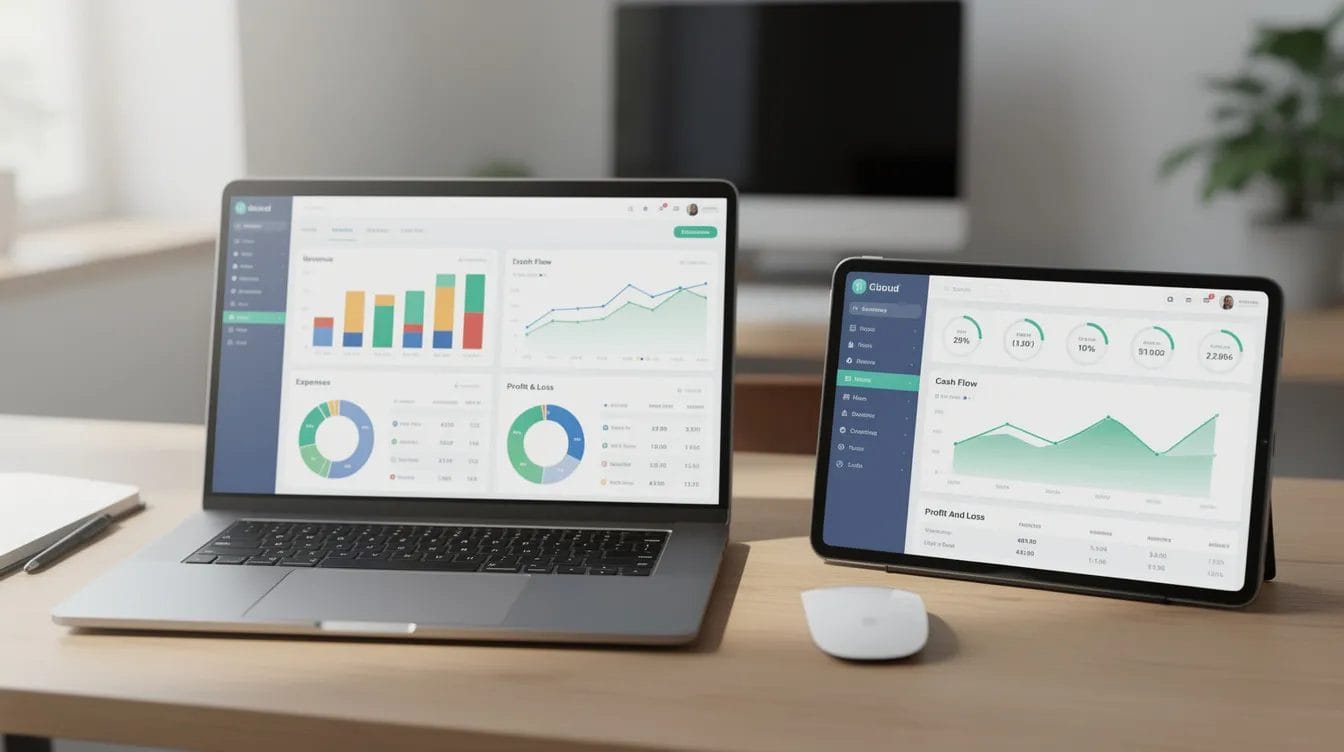
Over 120,000 small businesses use BILL for bookkeeping automation, and newer tools increasingly use artificial intelligence to automate tasks like expense classification and reconciliation review while the bookkeeper remains responsible for oversight. Cloud based tools allow real time access to financial data, meaning you can check your P&L, open invoices, or unpaid bills from your phone during the week-not just after your bookkeeper sends a monthly PDF.
Insight Business & Accounting Solutions helps set up and maintain this stack as part of its bookkeeping services for small businesses in Richland and the Tri-Cities and QuickBooks cleanup services, so the owner doesn't have to figure out tech integrations alone.
Security, Privacy, and Data Protection
Handing over bank feeds and financial records to someone you've never met in person raises real questions. Those questions deserve direct answers.
Secure systems protect sensitive financial data with encryption and multi-factor authentication. Reputable cloud based accounting platforms use bank level encryption on both data in transit and data at rest. Multi-factor authentication-requiring a second verification step beyond a password-blocks over 99.9% of account compromise attempts according to Microsoft research. Role-based permissions mean the bookkeeper can categorize transactions but cannot move money, run payroll, or access areas they don't need.
Firms like Insight Business & Accounting Solutions handle sensitive documents-payroll reports, tax returns, loan covenants-through secure upload links instead of email attachments. Staff access is limited, and documented retention policies govern how long records are kept.
Typical boundaries look like this: read-only access to bank and credit card activity for daily work, payment approvals that stay with the business owner or a designated manager, and written procedures defining who can approve what. If the relationship ends, the business retains ownership of its accounting subscription, receives a complete copy of its accounting records, and the firm's access is immediately revoked.
Benefits of Virtual Bookkeeping Services (and Where It Genuinely Helps)
Virtual bookkeeping is not automatically better than having someone in your office. But it offers specific advantages when matched with the right business and the right provider.
The first is time. The business owner no longer spends evenings categorizing transactions or chasing down bank statements. That time shifts to higher value activities-selling, managing projects, talking to customers.
The second is clarity. Monthly financial reports arrive on a predictable schedule and explain what actually happened in plain English-not just raw numbers. Real time access to financial data improves decision-making speed because you're not waiting until tax season to discover a problem.
The third is flexibility, one of the many benefits of virtual bookkeeping services for businesses with changing workloads. Virtual bookkeeping services can adapt to changing business needs easily. You can scale hours and scope up or down without adding another employee to payroll, paying health insurance, or covering paid time off. Virtual bookkeeping eliminates the need for full-time in-house staff for many small business owners. Depending on volume and complexity, virtual bookkeeping can save businesses $6,000 to $24,000 annually compared to a full-time hire, and it can reduce costs compared to hiring full-time staff when you factor in benefits, software licenses, and overhead costs.
The fourth is talent. Virtual bookkeepers can work remotely from anywhere with internet access, which means businesses can access specialized expertise without geographical constraints. A construction company in a smaller Washington town can work with professional bookkeepers who understand job costing, even if that expertise doesn't exist locally. Virtual bookkeeping allows access to specialized expertise beyond local talent-whether that's construction accounting, nonprofit fund tracking, or healthcare reimbursement.
For growing companies, scalability virtual bookkeeping services support can handle seasonal volume, expanding scope, and changing service needs without forcing a new hire. Solid books also feed directly into broader business accounting services such as tax filings, payroll, and compliance support because the numbers are current and organized.
Limitations and When In-Person Still Makes Sense
Virtual bookkeeping has limits, and it's not the right answer for every company.
An in house bookkeeper or frequent on-site presence often works better for businesses that handle large volumes of cash daily-multi-location restaurants without modern POS integration, for example. It also fits better in operations with complex paper workflows that haven't moved to digital yet, like certain manufacturing environments where physical documents still drive the process. And some owners want a staff member who handles front-office tasks plus bookkeeping at the same desk-phones, reception, HR paperwork. A virtual team can't answer your phone.
On the practical side, virtual bookkeeping work depends on stable internet and cloud based tools, and it usually works best for businesses already comfortable with remote work and digital document handling. It also requires the owner or staff to consistently upload or photograph documents. If the business rarely responds to emails or messages, miscommunication builds up quickly and consistent communication breaks down.
Some Insight Business & Accounting Solutions bookkeeping clients combine virtual services with periodic in-person meetings in the Tri-Cities area for annual planning, lender meetings, or major business changes. Choosing an in house bookkeeper is not a wrong decision. It's about matching the model to how the business actually operates.
Virtual Bookkeeping vs. In-House Bookkeeper: Quick Comparison
Here's a side-by-side view to organize the trade-offs-not to pick a winner.
Cost is not limited to the hourly rate. It also includes management time, training, software, benefits, and other overhead. Many virtual bookkeepers work across dozens of client accounts, which can help them recognize recurring problems faster.
An internal bookkeeper can take on administrative or on-site responsibilities that a remote bookkeeping firm cannot replace. Virtual bookkeeping can expand as the business grows, but that flexibility comes with less day-to-day visibility inside your workplace.
Map this table to your own business needs and decide from there.
Signs Your Small Business Is Ready for Virtual Bookkeeping
Not every business needs to switch. But if several of these sound familiar, it's worth exploring.
Signs Your Business Is Ready for Virtual Bookkeeping:
- You're regularly behind on bookkeeping more than one month at a time.
- You avoid looking at your accounting software because it doesn't match reality.
- You're over $500,000 in annual revenue and still relying on spreadsheets and bank balances to make decisions.
- You're planning for lending-SBA loan, equipment financing, line of credit-and your CPA keeps asking for up-to-date financials.
- You're hiring or laying off staff and don't have clear job costing or labor reports to guide payroll taxes and compensation decisions.
- Your existing bookkeeper has outgrown the role or left, and you don't want to rush another full-time hire.
- Your team is already remote or spread across multiple job sites throughout Washington State.
- You want a solid understanding of your financial operations but don't have the bandwidth for financial analysis yourself.
If several of these apply, a conversation about virtual bookkeeping-alongside alternatives like part-time in-house help or upgrading internal processes-is a reasonable next step.
How Communication Works with a Remote Bookkeeper
The fear that "virtual" means less communication is understandable. In practice, a well-structured virtual bookkeeping relationship often involves more consistent communication than many in-house arrangements, because the rhythm is intentional rather than incidental.
Expectations get set upfront: what's included each month, which communication channels to use (email, secure messaging, scheduled video calls), and a standard reporting calendar. Virtual bookkeeping services offer real time access to financial data through dashboards, so business owners aren't waiting in the dark between monthly reports.
A typical monthly cycle for an Insight Business & Accounting Solutions client looks like this. During weeks one through three, remote bookkeepers post and review transactions, following up with short questions as needed. During weeks four and five, reconciliations happen, unusual items get reviewed, and financial statements are prepared. By mid-month, financial reports are delivered along with three to five key observations or questions for the owner. Quarterly, an optional thirty- to sixty-minute video meeting covers trends, cash flow, and any business advisory topics focused on profitability, systems, and leadership the owner wants to discuss.
Technology should make it easier to talk with your bookkeeper, not harder. Owners can share screens, ask questions in real time, and walk through QuickBooks Online together-the same level of collaboration you'd get in person, without the commute.
Questions to Ask Before Hiring a Virtual Bookkeeping Firm
The best safeguard against a poor fit is asking very specific questions before you sign anything and reviewing independent client reviews that speak to service quality and communication.
- Who on your team will actually be doing my books, and what is their experience with businesses like mine?
- Which accounting software do you use, and who owns the subscription?
- How do you handle accounts payable, payroll, and sales tax-do you manage them directly or coordinate with my other providers?
- What does your monthly close process look like, and when can I expect financial reports?
- How will you help me understand the reports-not just send them?
- How do you secure bank feeds, login credentials, and document sharing?
- How often will we meet or talk, and what happens if I need extra help during a busy month or around tax season?
- What happens if we part ways-how do I get a complete copy of my books and documents?
- What payment terms are included in the engagement, including when invoices are sent, when they are due, and whether there are any late-payment policies?
Ask for a concrete example of how the firm has helped a business owner use financial information to make a decision-whether that's an equipment purchase, a hiring choice, or a pricing change. Many virtual bookkeepers will have stories; the ones who don't might not be focused on the same level of service you need. You can also look for client success stories that describe real-world results and experiences. Insight Business & Accounting Solutions typically walks through these questions in an initial conversation with prospective clients across Washington.
How Virtual Bookkeeping Supports Better Decisions, Not Just Cleaner Records
Getting the books done on time matters. But the real point of accurate financial records is what they let you do next.
Timely, organized books support tax planning year-round instead of a scramble during tax preparation in March and April. They inform payroll decisions-whether you can afford raises, bonuses, or a new hire-by showing gross margins, fixed costs, and variable costs clearly. Cash flow management becomes proactive rather than reactive when you can forecast upcoming expenses and identify slow months before they arrive. And bank relationships improve when you can hand a lender consistent financial statements and job costing reports on request.
Virtual bookkeeping services can grow as client needs evolve. During busy seasons, virtual teams can increase their hours, and virtual bookkeeping can scale back during slower periods-matching the cost to the work without carrying a fixed salary year-round. This kind of flexible support mirrors structured accounting and advisory packages designed for different growth stages. The same model can also support businesses that add internal remote finance staff or evaluate virtual bookkeeper jobs as they expand support. Businesses can access specialized expertise without geographic constraints, pulling in construction accounting knowledge or nonprofit fund experience as needed.
Consider a construction company in the Tri-Cities using job costing and bookkeeping insights from QuickBooks Online to discover that certain small residential jobs barely break even after overhead. With that financial data in hand, they shift bidding toward larger commercial projects with better margins. Or a healthcare clinic using monthly financials to decide whether to expand a location now or wait until cash flow stabilizes after a seasonal dip. These aren't hypothetical-they're the kinds of decisions that accurate financial information makes possible.
Insight Business & Accounting Solutions uses virtual bookkeeping data as the foundation for its outsourced CFO-style advisory services that focus on cash flow, profitability, and strategic planning. Clean, timely numbers make higher-level financial analysis possible. Without them, advisory work is guesswork.
Conclusion: Virtual Bookkeeping as Another Way to Deliver Accounting Services
Virtual bookkeeping is a delivery model, not a philosophy. The real value comes from the quality and timeliness of the financial information, the clarity of communication between owner and bookkeeper, and how well the numbers are used to explain what happened and support decisions. Whether those numbers arrive via a cloud dashboard or a printed report handed across a desk matters far less than whether they're accurate, current, and useful.
The businesses that tend to benefit most are growing small and midsize companies-especially in construction, professional services, healthcare, and other industries across Washington-that are comfortable with cloud based tools and want their bookkeeping to feed directly into tax planning, payroll, and strategic decisions. Solo entrepreneurs and remote teams also find that virtual services match how they already operate.
Use the comparison table and question checklist from this article to evaluate your options. If you're a business owner in Washington State who wants to explore whether virtual bookkeeping fits your situation, Insight Business & Accounting Solutions is happy to walk through your current systems, goals, and open questions. Schedule a conversation and bring your real numbers-that's where useful answers start.Virtual bookkeeping services can adapt to changing business needs easily. You can scale hours and scope up or down without adding another employee to payroll, paying health insurance, or covering paid time off. Virtual bookkeeping eliminates the need for full-time in-house staff for many small business owners. Depending on volume and complexity, virtual bookkeeping can save businesses $6,000 to $24,000 annually compared to a full-time hire, and it can reduce costs compared to hiring full-time staff when you factor in benefits, software licenses, and overhead costs.
The fourth is talent. Virtual bookkeepers can work remotely from anywhere with internet access, which means businesses can access specialized expertise without geographical constraints. A construction company in a smaller Washington town can work with professional bookkeepers who understand job costing, even if that expertise doesn't exist locally. Virtual bookkeeping allows access to specialized expertise beyond local talent—whether that's construction accounting, nonprofit fund tracking, or healthcare reimbursement.
Scalability allows businesses to adjust bookkeeping services based on their needs. Virtual bookkeeping services can scale with business growth and needs, and this scalability is what makes virtual bookkeeping business models work for growing companies. Solid books also feed directly into tax planning and preparation, payroll services, and business advisory work because the numbers are current and organized.