

Costing for Construction: How Contractors Protect Profit on Every Project
Why Construction Job Costing Matters
Accurate construction job costing is the difference between profit and loss for contractors today. With rising material prices, rising building costs, labor shortages, and tight bid margins, understanding your true construction costs is critical to staying competitive and profitable. Many contractors win competitive bids yet still lose money because their costing systems don't capture all actual expenses or reflect real-time changes during the construction process.
This article is written for construction business owners, estimators, and project managers looking to protect their margins and cash flow by mastering job costing. Insight Business & Accounting Solutions specializes in construction accounting and job costing and will guide you through practical steps to link costing directly to profitability, smarter bids, and better decision-making.
What you'll learn:
- Core cost components and the hidden costs contractors often miss
- How job costing and estimating connect to reveal profit leaks
- Best practices for using QuickBooks Online for construction costing
- How to allocate overhead costs and set realistic markup
- When and how to bring in expert help to safeguard your bottom line
What Is Construction Job Costing?
Construction job costing is the process of tracking all actual costs associated with a specific construction project—including materials, labor, equipment, subcontractors, and indirect expenses—to compare against cost estimates and budgets. It provides a detailed financial picture of each job's profitability and cash flow while supporting more accurate cost estimates by showing how actual job performance compares with the original projections.
Unlike simple bookkeeping, job costing breaks down costs by project and cost category, enabling contractors to identify where money is being spent, spot cost overruns early, and make informed adjustments before it's too late. Construction cost estimating predicts expenses before work begins, while job costing measures what actually happened. Comparing estimated costs to actual costs helps contractors improve future bids, protect profit margins, and make better business decisions.

Construction Job Costing FAQs
What is construction job costing? Tracking all actual costs by project to compare against estimated costs and manage profitability.
What is the difference between markup and margin? Markup is the percentage added to costs to set price; margin is the percentage of sales revenue that is profit.
How often should job costs be reviewed? At least monthly during construction to catch overruns early and adjust forecasts.
Can QuickBooks track job costing? Yes, with proper setup using Projects, classes, and cost codes aligned to your estimating structure.
Why do contractors lose money on profitable jobs? Hidden costs, inaccurate labor assumptions, and poor change order tracking often erode margins.
Signs Your Construction Company Needs Better Job Costing
If any of these situations sound familiar, it's time to take a closer look at your job costing system:
- You don't know which projects are the most profitable.
- Gross margins vary significantly from one project to the next.
- Your schedule is full, but cash flow is consistently tight.
- Change orders aren't tracked or billed consistently.
- Actual job costs rarely match your original estimates.
- You rely on your bank balance instead of financial reports to make business decisions.
Why Profitable Jobs Still Lose Money
Many contractors assume that winning a bid guarantees a profitable project. In reality, many jobs that appear profitable on paper lose money because actual costs exceed the original estimate or important expenses go untracked. The most common causes include:
- Underestimating labor productivity: Crews often take longer than expected because of weather delays, travel between job sites, rework, or lower-than-expected productivity. Labor burden—including payroll taxes, workers' compensation, and employee benefits—is also frequently overlooked. A $30 hourly wage can easily become a fully burdened labor cost of $39–$42 per hour.
- Ignoring indirect and hidden costs: Site supervision, small tools, fuel, temporary facilities, safety equipment, and consumable supplies often aren't assigned to individual jobs, quietly reducing profitability.
- Material price fluctuations: Rising material costs can quickly erode profit margins if estimates aren't updated regularly or contingency allowances aren't included in the bid.
- Poor change order management: Change orders that aren't documented, approved, and billed promptly often result in work being completed without generating additional revenue.
- Cash flow timing: Contractors frequently pay for labor, materials, and subcontractors long before customer payments are received. Even profitable projects can create cash flow problems if costs aren't monitored closely.
Unexpected site conditions, scheduling delays, and scope changes can also increase construction costs throughout a project. Comparing estimated costs to actual job costs on a regular basis allows contractors to identify problems early, make informed decisions, and protect their profit before the job is complete.
Why Busy Contractors Run Out of Cash
A full project schedule doesn't always translate into healthy cash flow. Many contractors finish profitable projects yet still struggle to pay suppliers, cover payroll, or invest in the next job because cash is tied up long before customer payments arrive.
- Front-loaded costs: Materials, payroll, equipment, and subcontractors often have to be paid before progress payments are received, creating a gap between cash going out and cash coming in.
- Slow collections: Delayed customer payments, retainage, and billing disputes can leave cash tied up for weeks or even months.
- Inadequate job costing: Without timely job cost reports, contractors can't identify overruns early, forecast future cash needs, or adjust billing before problems grow.
- Overhead drain: Fixed expenses such as office payroll, insurance, software, vehicles, and rent continue regardless of when projects are paid, putting additional pressure on cash flow.
- Poor billing practices: Delayed invoices, missed change orders, and incomplete progress billings slow collections and reduce available working capital.
The Cost of Waiting to Fix Your Job Costing System
Small mistakes in job costing compound over time, quietly eroding your profit margins. Many contractors only discover these problems after a building project is completed-but by then, the profit is already gone.
Without real-time costing, you lose the chance to make corrections while the construction phase is still underway. Good job costing systems provide early warnings so you can adjust bids, implement cost control measures, and protect your bottom line before it's too late.
???? Learn more about our construction accounting and job costing services
Core Cost Components of a Construction Project
Every construction project includes three primary cost categories. Understanding the difference between them is the foundation of accurate estimating, effective job costing, and long-term profitability.
Direct Costs: These are expenses that can be assigned directly to a specific project. Examples include materials such as lumber and concrete, field labor, equipment rentals and operating costs, subcontractor work, permits, and other project-specific expenses. Because these costs are tied directly to the job, they have the greatest impact on estimating accuracy and project profitability.
Indirect Costs: These are expenses that support multiple projects but cannot be assigned to a single job. Examples include site supervision, project management, temporary facilities, small tools, safety programs, shared equipment, insurance, and fuel used across multiple projects. Failing to allocate indirect costs properly often causes contractors to underestimate the true cost of a project.
Overhead Costs: Overhead consists of the expenses required to operate your business regardless of which projects you're working on. These include office rent, administrative payroll, owner compensation, software subscriptions, marketing, accounting, and company vehicles that aren't assigned to a specific job.
Separating direct costs, indirect costs, and overhead allows contractors to produce more accurate estimates, monitor project performance, identify profit leaks, and make better business decisions throughout the construction process.
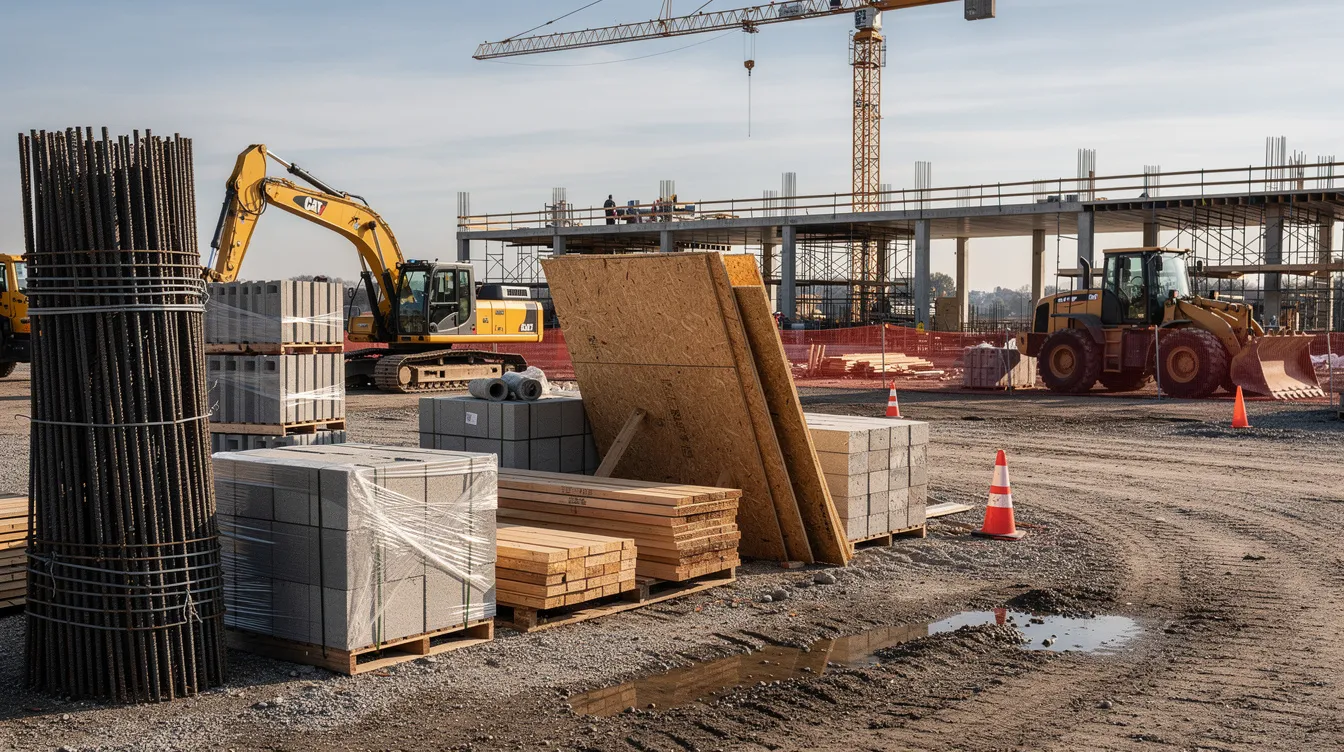
Direct vs. Indirect Costs: What Contractors Need to Know
One of the most common job costing mistakes contractors make is incorrectly classifying direct and indirect costs. While direct costs are assigned to a specific project, indirect costs support multiple projects and must be allocated appropriately. Misclassifying these expenses can make an unprofitable job appear successful and lead to inaccurate estimates on future projects.
For example, consider a commercial tenant improvement project. If the project manager's time, company trucks, fuel, and temporary facilities are treated as direct costs on one project but indirect costs on another, the reported gross margin can vary significantly even when the actual work is nearly identical.
Consistently classifying costs gives contractors a more accurate picture of project performance. It also improves estimating by ensuring future bids are based on the true cost of completing similar work. Whether you're bidding public projects or private commercial work, accurate cost classification helps establish realistic markup, protect profit margins, and make better business decisions.
Using QuickBooks Online to Track Construction Job Costs
QuickBooks Online can be an effective job costing system when it's configured correctly. It allows contractors to track income, expenses, labor, and profitability by project while providing the financial information needed to make better business decisions. Many contractors also use construction estimating software or construction management software alongside QuickBooks. The goal isn't to replace QuickBooks—it's to ensure all systems work together and produce accurate financial data.
When your estimating software, construction estimation software, project management tools, and accounting system are aligned, you can compare estimated costs to actual costs, identify profit leaks sooner, and make better decisions on future bids.
Best practices include:
- Using the Projects feature to track income, expenses, and profitability for each job.
- Creating cost codes that align with your estimating process and job cost reports.
- Tracking labor burden, including payroll taxes, workers' compensation, and employee benefits, to calculate the true cost of labor.
- Assigning materials, equipment, and subcontractor expenses to the correct cost of goods sold accounts.
- Reconciling job cost reports regularly to compare estimated costs with actual project costs.
- Locking completed accounting periods after review to maintain accurate financial records.
A properly configured QuickBooks Online file provides more than accurate bookkeeping—it gives contractors the financial information they need to monitor job performance, improve estimating, and make more profitable business decisions. Insight Business & Accounting Solutions helps Washington contractors set up, clean up, and optimize QuickBooks Online so their job costing system supports both day-to-day operations and long-term growth.
Step‑by‑Step Cost Estimation Process
A consistent construction estimating process reduces surprises and improves bid accuracy. Estimators create accurate construction cost estimates by following a disciplined, repeatable process. Using standardized methods improves organization in estimating and makes it easier to compare results across projects of different complexity.
- Capture and clarify scope: Review project plans, construction documents, and specifications thoroughly. Estimators analyze construction documents to inform estimates-this is where 90% of errors originate.
- Perform quantity takeoff: List all required materials, labor tasks, and equipment needed. Estimators perform quantity takeoffs to list required materials. Accurate material takeoffs prevent future cost surprises.
- Price materials and equipment: Use current supplier quotes, historical cost data, and construction cost data. Account for freight, waste, storage, and material price escalation.
- Calculate labor costs: Include crew size, hours per unit, labor burden, overtime, and productivity assumptions. You must estimate labor costs with the fully loaded rate for each trade.
- Add subcontractor quotes: Confirm specialty trades pricing and verify that quotes include insurance, bonds, and mobilization.
- Layer in indirect and overhead costs: Allocate shared expenses appropriately using a consistent allocation base.
- Apply contingency and profit margins: Account for unforeseen expenses, weather delays, and your desired net margin. Every detailed estimate should include a contingency line.
- Review and validate: Double-check assumptions, compare to historical data from past projects, and adjust. Estimators validate estimates against industry standards. Building complexity affects the overall construction costs and should be reflected when validating an accurate cost estimate.
Effective construction cost estimating combines various methodologies and data sources. Bottom-up estimating requires breaking down projects into granular tasks and costs, while parametric estimating utilizes historical data for cost prediction based on project factors. Early-stage models may also use square foot pricing to compare unit costs by project size. Construction estimating methods include production function and empirical cost inference. Unit costs are assigned to each facility component in estimates, making it possible to calculate construction costs with greater precision. Using data sources to benchmark assumptions also helps support estimate validation.
Documenting assumptions like weather delays, production rates, and material lead times makes it easier to update the construction estimate when changes occur during the project.

The Hidden Costs Contractors Never Estimate
Beyond obvious expenses, many contractors overlook costs that quietly erode margins:
- Small tools and consumables: Nails, fasteners, adhesives, safety gear, and other incidental equipment costs add up across multiple jobs
- Maintenance costs: Equipment upkeep, repairs, and downtime between projects
- Legal fees and permits: Inspection fees, permit renewals, and compliance documentation are often underestimated or forgotten entirely
- Unforeseen expenses: Weather impacts, rework from design changes, or site condition surprises
- Capital costs: Investments in equipment or vehicles that require depreciation and financing
- Travel and mobilization: Time and fuel getting crews and equipment from shop to the project site
Including these in your detailed cost estimate and job costing prevents profit erosion and eliminates surprises that turn a winning bid into a losing job.
Common Job Costing and Estimating Mistakes (And How to Avoid Them)
Even seasoned contractors in the construction industry make these errors:
- Mixing personal and business expenses, making it impossible to see true project budget performance
- Booking all costs to generic categories like "Materials" without job-specific cost codes
- Ignoring labor burden and payroll taxes when building bid estimates
- Leaving off indirect costs and overhead costs in competitive bids
- Not tracking change orders separately from original project scope
- Failing to update estimates for material price spikes or supply chain delays
- Using national average costs or cost data without local adjustments for Washington wage rates and supplier markets
- Producing inaccurate estimates by skipping the validation step against historical data
Fixes: Use job-specific cost codes, track labor time entries by job, review change order profitability separately, and incorporate local wage and tax factors into every estimate. Expert CPA help can ensure compliance with Washington's L&I requirements, sales tax rules, and prevailing wage laws under RCW 39.12.
The accuracy of estimates can vary from ±5% to ±50% depending on the type of estimate and the quality of your construction cost estimation process. A magnitude estimate early in design will naturally be less precise than a definitive estimate prepared from final construction documents.
How Job Costing Improves Profitability and Cash Flow
Real-time job costing empowers contractors to make decisions while there's still time to protect margins:
- Identify underpriced work types and adjust future bids based on actual construction costs
- Spot crews that consistently run over hours and address productivity issues
- Detect material cost overruns due to supplier price changes before they consume your contingency
- Pinpoint jobs that drain cash or require extra overhead attention
- Track expected costs against actual expenses at each construction phase
Example: A contractor managing multiple concurrent projects can use job cost reports to allocate their best crews to jobs with the tightest margins, avoiding costly delays or liquidated damages penalties.
Better job costing also improves cash flow forecasting by showing when supplier payments are due and whether progress billings cover front-loaded costs. This is project management at its most practical-using real numbers to drive real decisions.
Allocating Overhead Costs and Setting Markup
Overhead allocation is often the missing link between being busy and being profitable. Industry data shows that small to midsize construction firms ($1–5M revenue) typically carry overhead rates around 15%, while specialty trades can hit 18–25% depending on compliance demands and risk.
Common allocation methods include:
| Method | Best For |
|---|---|
| Percentage of direct labor | Labor-intensive trades (framing, concrete) |
| Percentage of total project cost | General contractors with diverse cost mix |
| Per crew or per hour basis | Firms tracking productivity closely |
Example: If annual overhead is $600,000 and expected direct job costs are $3 million, the overhead factor is 20%. Every estimate must include at least this amount before adding profit.
Understanding the difference between markup and margin is critical:
| Target Net Margin | Required Markup (approx.) |
|---|---|
| 5% | ~26% |
| 10% | ~33% |
| 15% | ~43% |
Targeting a 10% net profit might require 25–35% markup depending on your overhead structure. Many contractors confuse markup with margin, leading to underpricing that slowly bleeds the business dry.
Insight Business & Accounting Solutions helps contractors calculate true break-even markup and design pricing strategies for sustainable growth and smarter tax planning.
Washington-Specific Tax, Payroll, and Compliance Considerations
Washington's unique tax and labor environment directly affects your total cost on every job:
- Workers' compensation (L&I) premiums vary by trade classification and must be included in labor burden calculations
- Paid sick leave requirements add cost that many estimators overlook
- Unemployment insurance rates fluctuate based on claims history
- Prevailing wage rules apply on public works projects-Washington's minimum wage is $17.13/hr as of 2026, but prevailing wage rates are substantially higher. For example, a bricklayer in Grant County earns approximately $33.95/hr plus $19.33/hr in fringe benefits, bringing the actual cost to about $53.28/hr.
- Sales and use tax on materials and subcontractor payments follow specific rules that vary by project type
Misclassifying these costs can distort job profitability and create compliance risk. Insight Business & Accounting Solutions ensures these factors are properly captured in your job costing and control estimates, keeping you compliant with state regulations while protecting your margins.
Visual Guides to Construction Job Costing
Types of Construction Cost Estimates
| Estimate Type | When Used | Typical Accuracy | Purpose |
|---|---|---|---|
| Conceptual estimate | Early planning | ±25–50% | Feasibility estimates assess project viability within budget |
| Preliminary estimate | Design development | ±15–25% | Preliminary estimates provide a ballpark figure of costs for the project team |
| Detailed estimate | Final design | ±5–10% | Detailed estimates analyze all project costs comprehensively |
| Bid estimate | Competitive bidding | ±5–10% | Bid estimates set the price for competitive bidding on a specific project |
| Definitive estimate | Pre-construction | ±5% | Definitive estimates are highly detailed and accurate for cost control |
Preliminary estimates offer a ballpark figure for project costs early in planning, while detailed estimates provide a comprehensive breakdown of project costs. Each type serves a different purpose in the construction estimation process, and using the right one at the right stage prevents wasted effort and sets realistic expectations for the project team.
Markup vs. Margin Quick Reference
| Cost | Markup % | Selling Price | Profit | Margin % |
|---|---|---|---|---|
| $100,000 | 10% | $110,000 | $10,000 | 9.1% |
| $100,000 | 20% | $120,000 | $20,000 | 16.7% |
| $100,000 | 33% | $133,000 | $33,000 | 24.8% |
Direct vs. Indirect Cost Comparison
| Direct Costs (Job-Specific) | Indirect Costs (Shared Across Jobs) |
|---|---|
| On-site labor hours | Project manager salary |
| Lumber, concrete, rebar | Small tools and consumables |
| Equipment rental for specific job | Job truck fuel and insurance |
| Subcontractor payments | Safety program costs |
| Job-specific permits | Temporary site facilities |
These references make it easier for your project team to classify costs correctly from the start-feeding cleaner data into both your unit cost estimating and your accounting system.
Protect Your Profit Today
If you're unsure whether your current job costing system is giving you accurate numbers, Insight Business & Accounting Solutions can review your QuickBooks file, costing structure, and financial reports to identify where profit may be slipping through the cracks.
The contractors who thrive in Washington's construction industry aren't just good builders-they're the ones who know their numbers. They use a disciplined cost estimation process, track future costs against budgets in real time, and adjust before small problems become expensive ones.
Small improvements in your costing and accounting systems can add up to significant profit and cash flow gains over the next 12–24 months. Whether you need help setting up job costing, cleaning up your QuickBooks data, calculating your true overhead rate, or staying compliant with Washington's tax and wage requirements-we're here to help.
Schedule a consultation today to start protecting your bottom line and building a more profitable construction business.